
Image 1: Peeling the Tape from the Grid Tile
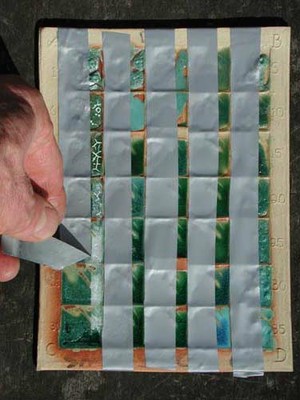
If any difference is visible between the taped over and exposed areas within a cell, this is an indication the glaze is not stable in acid. (See Images 2 and 3.) Be aware however that a lack of any visible difference does NOT guarantee stability.
Image 2: The Grid Tile after the tape has been removed.
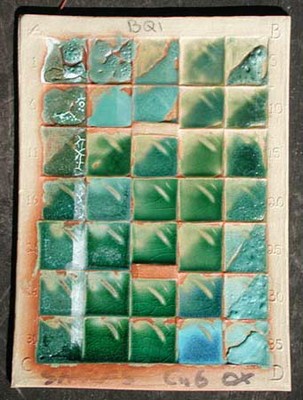
Corner A - Top left are high alumina glazes.
Corner B - Top right glazes are high in both alumnina and silica, which means low in flux.
Corner C - Bottom left are high flux glazes.
Corner D - Bottom right are high silica glazes.
Image 3: Close-up of the C-corner which is high in fluxes, and low in alumina and silica.
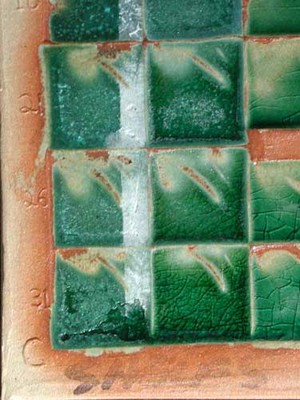
It is obvious from the grid that the low silica glazes (along the left hand side) are quite unstable in the acid.


No comments:
Post a Comment